DevOps and Deployment
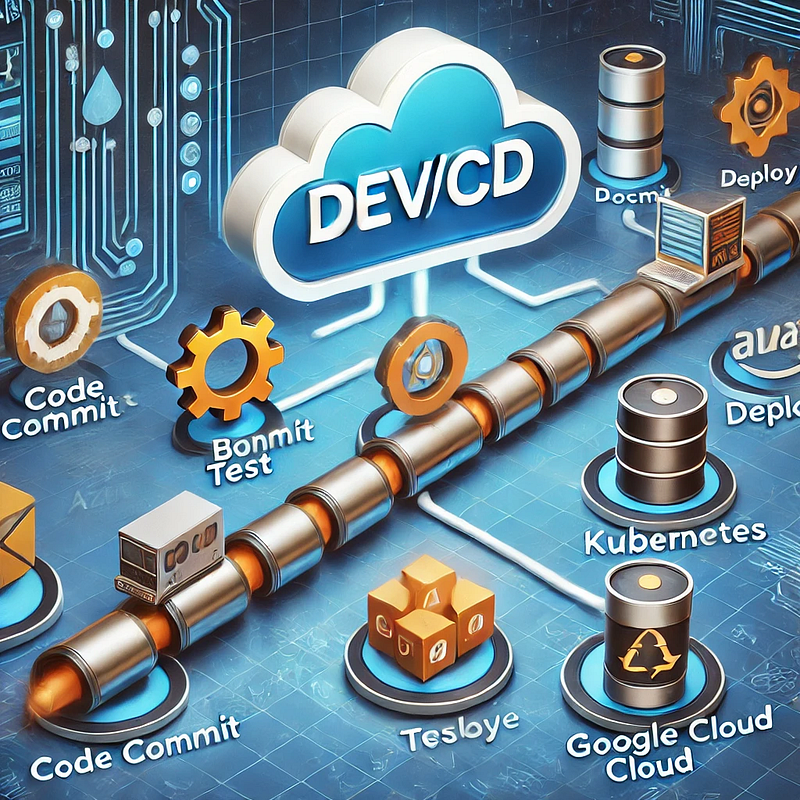
DevOps and Deployment: Streamlining Software Delivery
Introduction
- Brief overview of DevOps and its role in modern software development.
- Importance of automation and continuous delivery in deployment.
- Key benefits: faster releases, improved collaboration, and increased reliability.
1. What is DevOps?
- Definition and purpose.
- Core principles: Collaboration, Automation, Continuous Integration (CI), Continuous Deployment (CD), and Monitoring.
2. The DevOps Deployment Lifecycle
- Plan: Agile methodologies and backlog prioritization.
- Develop: Version control (Git, GitHub, GitLab, Bitbucket).
- Build & Test: CI/CD pipelines, automated testing.
- Release & Deploy: Automated deployments with containerization (Docker, Kubernetes).
- Operate & Monitor: Logging, monitoring, and feedback loops.
3. CI/CD: The Backbone of DevOps Deployment
Continuous Integration (CI)
- Automating code integration and testing.
- Tools: Jenkins, GitHub Actions, GitLab CI/CD, CircleCI.
Continuous Deployment (CD)
- Automating deployments to production.
- Canary releases, blue-green deployments, feature flags.
Example CI/CD Pipeline (GitHub Actions & Docker)
yamlname: CI/CD Pipelineon:
push:
branches:
- main
jobs:
  build:
    runs-on: ubuntu-latest
    steps:
      - name: Checkout Code
        uses: actions/checkout@v2
      - name: Build Docker Image
        run: docker build -t myapp .
      - name: Push to Docker Hub
        run: docker push myapp
4. Containerization & Orchestration
- Docker: Packaging applications in lightweight containers.
- Kubernetes: Managing containerized applications at scale.
- Terraform & Infrastructure as Code (IaC): Automating infrastructure provisioning.
5. Cloud Deployments in DevOps
- AWS (EKS, ECS, Lambda)
- Azure DevOps & Azure Kubernetes Service (AKS)
- Google Cloud (GKE, Cloud Run)
6. Security & Monitoring in DevOps Deployment
- Implementing security best practices: Secrets management, role-based access.
- Monitoring Tools: Prometheus, Grafana, ELK Stack, Datadog.
- Logging & Alerting: Centralized logging with Splunk, AWS CloudWatch, etc.
7. Best Practices for DevOps Deployment
- Automate everything.
- Implement security from the start (DevSecOps).
- Use microservices architecture.
- Optimize pipelines for faster feedback.
Conclusion
- How DevOps transforms deployment workflows.
- Future trends: AI-driven DevOps, GitOps, and serverless deployments.
- Encouraging DevOps adoption for efficient software delivery.
WEBSITE: https://www.ficusoft.in/full-stack-developer-course-in-chennai/


Comments
Post a Comment