ETL Pipelines: How Data Moves from Raw to Insights
Introduction
- Businesses collect raw data from various sources.
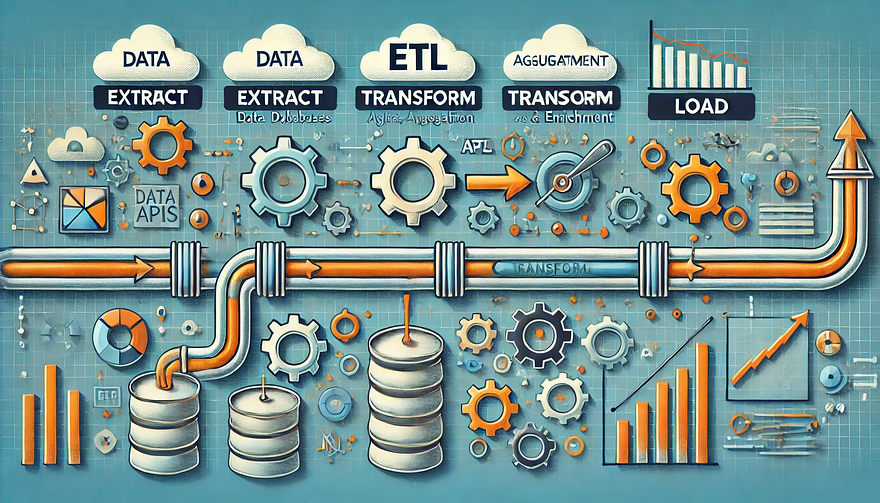
- ETL (Extract, Transform, Load) pipelines help convert this raw data into meaningful insights.
- This blog explains ETL processes, tools, and best practices.
1. What is an ETL Pipeline?
- An ETL pipeline is a process that Extracts, Transforms, and Loads data into a data warehouse or analytics system.
- Helps in cleaning, structuring, and preparing data for decision-making.
1.1 Key Components of ETL
- Extract: Collect data from multiple sources (databases, APIs, logs, files).
- Transform: Clean, enrich, and format the data (filtering, aggregating, converting).
- Load: Store data into a data warehouse, data lake, or analytics platform.
2. Extract: Gathering Raw Data
- Data sources: Databases (MySQL, PostgreSQL), APIs, Logs, CSV files, Cloud storage.
- Extraction methods:
- Full Extraction: Pulls all data at once.
- Incremental Extraction: Extracts only new or updated data.
- Streaming Extraction: Real-time data processing (Kafka, Kinesis).
3. Transform: Cleaning and Enriching Data
- Data Cleaning: Remove duplicates, handle missing values, normalize formats.
- Data Transformation: Apply business logic, merge datasets, convert data types.
- Data Enrichment: Add contextual data (e.g., join customer records with location data).
- Common Tools: Apache Spark, dbt, Pandas, SQL transformations.
4. Load: Storing Processed Data
- Load data into a Data Warehouse (Snowflake, Redshift, BigQuery, Synapse) or a Data Lake (S3, Azure Data Lake, GCS).
- Loading strategies:
- Full Load: Overwrites existing data.
- Incremental Load: Appends new data.
- Batch vs. Streaming Load: Scheduled vs. real-time data ingestion.
5. ETL vs. ELT: What’s the Difference?
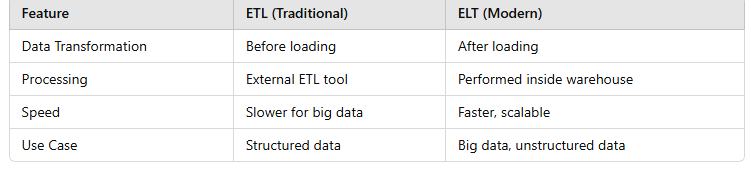
- ETL is best for structured data and compliance-focused workflows.
- ELT is ideal for cloud-native analytics, handling massive datasets efficiently.
6. Best Practices for ETL Pipelines
✅ Optimize Performance: Use indexing, partitioning, and parallel processing.
✅ Ensure Data Quality: Implement validation checks and logging.
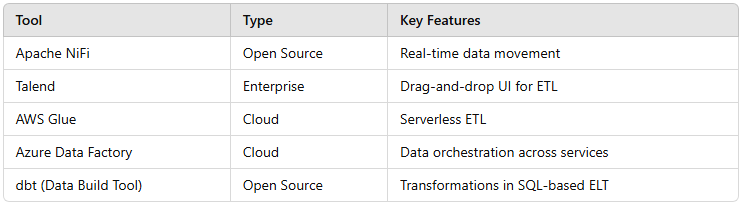
✅ Automate & Monitor Pipelines: Use orchestration tools (Apache Airflow, AWS Glue, Azure Data Factory).
✅ Secure Data Transfers: Encrypt data in transit and at rest.
✅ Scalability: Choose cloud-based ETL solutions for flexibility.
7. Popular ETL Tools
Conclusion
- ETL pipelines streamline data movement from raw sources to analytics-ready formats.
- Choosing the right ETL/ELT strategy depends on data size, speed, and business needs.
- Automated ETL tools improve efficiency and scalability.
WEBSITE: https://www.ficusoft.in/data-science-course-in-chennai/


Comments
Post a Comment