Handling Streaming Data Pipelines in Azure Data Factory for IoT Applications
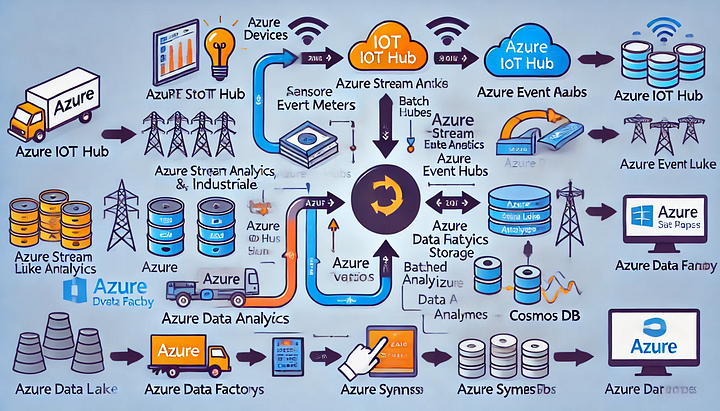
Streaming data pipelines process continuous streams of real-time data from IoT devices, ensuring timely insights and actions. While Azure Data Factory (ADF) is primarily a batch-processing tool, it can be integrated with real-time streaming services to build an efficient pipeline.
Key Steps to Handle Streaming Data Pipelines
1. Data Ingestion
- Azure IoT Hub: Collects sensor data from connected IoT devices.
- Azure Event Hubs: Handles large-scale real-time data ingestion.
- Kafka on Azure: Alternative for high-throughput streaming.
2. Real-Time Data Processing
Since ADF doesn’t natively support real-time streaming, you can use:
- Azure Stream Analytics (ASA): Applies real-time transformations (filtering, aggregation, anomaly detection) on streaming data.
- Azure Functions: Performs lightweight, event-driven processing.
- Databricks Structured Streaming: For advanced analytics and ML on streaming data.
3. Data Storage
- Azure Data Lake Storage (ADLS): Stores raw or processed data for further processing.
- Azure Synapse Analytics: Stores data for analysis and reporting.
- Cosmos DB: Ideal for low-latency NoSQL storage for real-time applications.
4. Data Orchestration & Integration
- ADF Triggers: Use event-based triggers to integrate batch processing with streaming data.
- Data Flows: Apply transformations and push processed data to long-term storage or dashboards.
- Power BI Real-Time Dashboards: Connects to Event Hubs and Stream Analytics for visualization.
Best Practices for Streaming Data Pipelines
- Optimize Throughput: Use partitioning in Event Hubs to handle high data volumes.
- Use Checkpointing: Ensures fault tolerance in Stream Analytics and Databricks.
- Implement Auto-Scaling: Scale Event Hubs and ASA based on load.
- Ensure Low Latency: Use Cosmos DB for real-time data access.
- Security & Compliance: Encrypt and monitor streaming data to meet compliance standards.
WEBSITE: https://www.ficusoft.in/azure-data-factory-training-in-chennai/


Comments
Post a Comment