Understanding the Java Virtual Machine (JVM): Internals and Optimization
Introduction
- Briefly introduce the JVM and its role in running Java applications.
- Highlight why understanding JVM internals is crucial for developers.
- Mention key aspects like performance, memory management, and optimizations.
1. JVM Architecture: An Overview
- Explain how JVM acts as an abstraction layer between Java code and the underlying hardware.
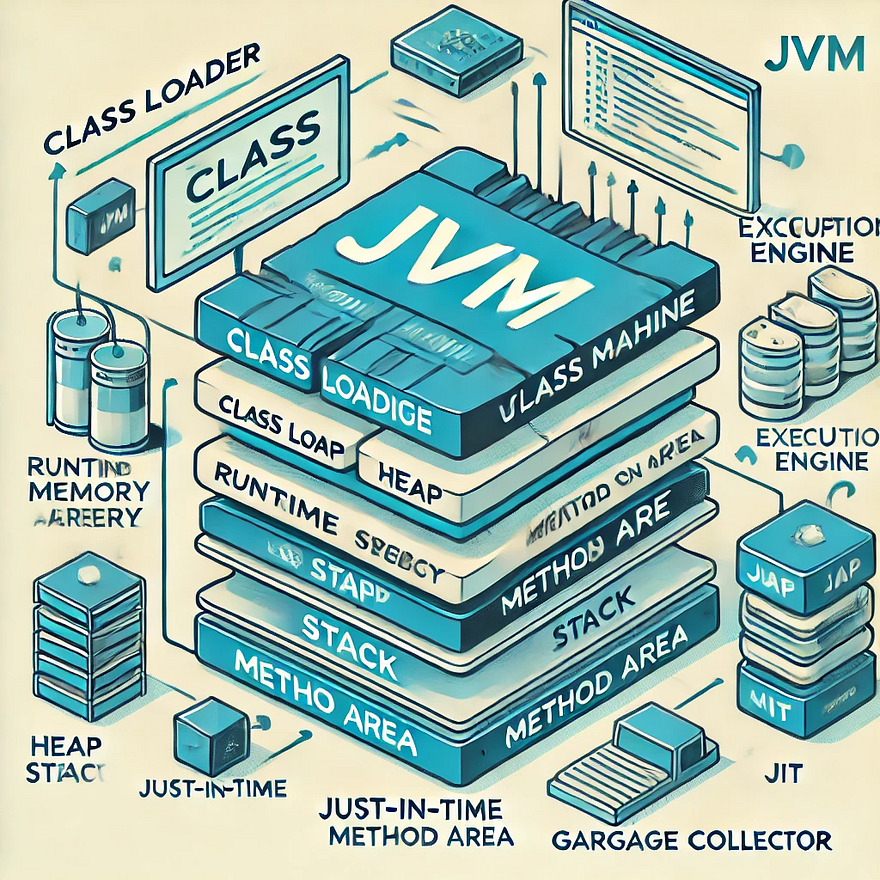
- Key components:
- Class Loader: Loads bytecode into memory.
- Runtime Memory Areas: Heap, Stack, Method Area, etc.
- Execution Engine: Converts bytecode into native code.
- Garbage Collector (GC): Manages memory automatically.
2. JVM Memory Management
- Heap vs. Stack Memory: What each is used for.
- Method Area & Runtime Constant Pool: Storage for metadata and constants.
- Garbage Collection (GC) Mechanisms:
- Serial, Parallel, CMS, G1, and ZGC collectors.
- When and how GC runs.
- Tuning GC for performance (using JVM options like
-XX:+UseG1GC).
3. Just-In-Time (JIT) Compilation
- How JIT compiles frequently used bytecode into native machine code for performance.
- Difference between:
- Interpreter Mode (slower execution but quick startup).
- JIT Compilation (optimizes hot code paths).
- JVM optimizations like:
- Method Inlining
- Loop Unrolling
- Escape Analysis
4. JVM Optimization Techniques
- Tuning JVM with Command-line Flags
-Xmsand-Xmxfor memory allocation.-XX:+PrintGCDetailsfor monitoring GC.
- Profiling and Monitoring Tools
- JVisualVM, JConsole, Java Flight Recorder.
- Code-level Optimizations
- Reducing object creation to avoid excessive GC.
- Using efficient data structures (
ArrayListvs.LinkedList). - Avoiding memory leaks (proper use of WeakReferences, ThreadLocal).
5. JVM Performance Best Practices
- Selecting the right GC algorithm for different workloads.
- Analyzing JVM logs to detect performance bottlenecks.
- Using Ahead-of-Time (AOT) Compilation (like GraalVM) for even faster execution.
Conclusion
- Summarize key takeaways: JVM architecture, memory management, JIT compilation, and optimizations.
- Emphasize the importance of tuning JVM settings for different applications.
WEBSITE: https://www.ficusoft.in/core-java-training-in-chennai/


Comments
Post a Comment