Use cases like integrating sales data from multiple sources.
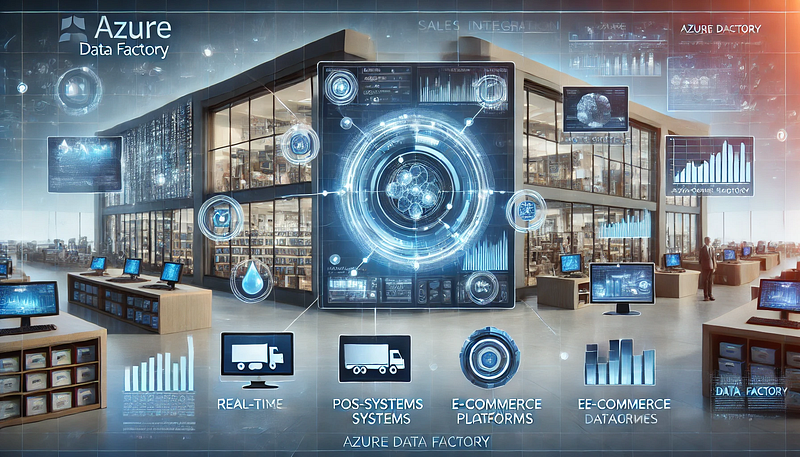
Retailers often collect sales data from various sources, including point-of-sale (POS) systems, e-commerce platforms, third-party marketplaces, and ERP systems.
Azure Data Factory (ADF) enables seamless integration of this data for unified reporting, analytics, and business insights. Below are key use cases where ADF plays a crucial role:
1. Omnichannel Sales Data Integration
Scenario: A retailer operates physical stores, an online website, and sells on third-party marketplaces (Amazon, eBay, Shopify). Data from these sources need to be unified for accurate sales reporting.
- Extracts sales data from POS systems, e-commerce APIs, and ERP databases.
- Loads data into a centralized data warehouse (Azure Synapse Analytics).
- Enables real-time updates for tracking product performance across all channels.
🔹 Business Impact: Unified sales tracking across online and offline channels for better decision-making.
2. Real-Time Sales Analytics for Demand Forecasting
Scenario: A supermarket chain wants to predict demand by analyzing real-time sales trends across different locations.
✅ ADF Solution:
- Uses Event-Based Triggers to process real-time sales transactions.
- Connects to Azure Stream Analytics to generate demand forecasts.
- Feeds insights into Power BI for managers to adjust inventory accordingly.
🔹 Business Impact: Reduced stockouts and overstocking, improving revenue and operational efficiency.
3. Sales Performance Analysis Across Regions
Scenario: A multinational retailer needs to compare sales performance across different countries and regions.
✅ ADF Solution:
- Extracts regional sales data from distributed SQL databases.
- Standardizes currency, tax, and pricing variations using Mapping Data Flows.
- Aggregates data in Azure Data Lake for advanced reporting.
🔹 Business Impact: Enables regional managers to compare performance and optimize sales strategies.
4. Personalized Customer Insights for Marketing
Scenario: A fashion retailer wants to personalize promotions based on customer purchase behavior.
✅ ADF Solution:
- Merges purchase history from CRM, website, and loyalty programs.
- Applies AI/ML models in Azure Machine Learning to segment customers.
- Sends targeted promotions via Azure Logic Apps and Email Services.
🔹 Business Impact: Higher customer engagement and improved sales conversion rates.
5. Fraud Detection in Sales Transactions
Scenario: A financial services retailer wants to detect fraudulent transactions based on unusual sales patterns.
✅ ADF Solution:
- Ingests transaction data from multiple sources (credit card, mobile wallets, POS).
- Applies anomaly detection models using Azure Synapse + ML algorithms.
- Alerts security teams in real-time via Azure Functions.
🔹 Business Impact: Prevents fraudulent activities and financial losses.
6. Supplier Sales Reconciliation & Returns Management
Scenario: A retailer needs to reconcile sales data with supplier shipments and manage product returns efficiently.
✅ ADF Solution:
- Integrates sales, purchase orders, and supplier shipment data.
- Uses Data Flows to match sales records with supplier invoices.
- Automates refund and restocking workflows using Azure Logic Apps.
🔹 Business Impact: Improves supplier relationships and streamlines return processes.
Conclusion
Azure Data Factory enables retailers to integrate, clean, and process sales data from multiple sources, driving insights and automation. Whether it’s demand forecasting, fraud detection, or customer personalization, ADF helps retailers make data-driven decisions and enhance efficiency.
WEBSITE: https://www.ficusoft.in/azure-data-factory-training-in-chennai/


Comments
Post a Comment