Explore how ADF might integrate AI/ML capabilities in the future.
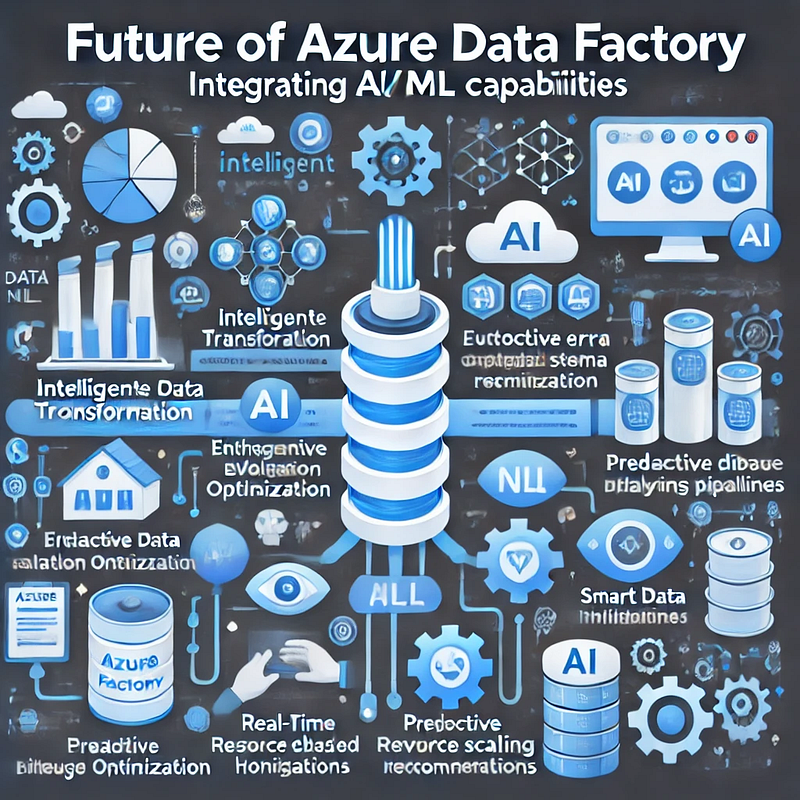
Azure Data Factory (ADF) is a powerful data integration tool designed to handle complex ETL (Extract, Transform, Load) and data movement tasks. As organizations increasingly rely on artificial intelligence (AI) and machine learning (ML) to extract insights from data, ADF is poised to evolve with smarter capabilities. Here’s a look at how ADF might integrate AI/ML features in the future.
1. Intelligent Data Transformation
ADF may incorporate AI-driven transformation capabilities to streamline data preparation tasks, such as:
- Automated Data Cleansing: Using machine learning models to identify and correct data inconsistencies, outliers, and errors.
- Schema Evolution Handling: AI may intelligently adapt to changing data schemas, ensuring data pipelines continue functioning without manual intervention.
2. Predictive Pipeline Optimization
AI models could enhance ADF’s ability to predict and optimize pipeline performance by:
- Proactive Error Detection: Analyzing historical data to identify potential points of failure before they occur.
- Resource Scaling Recommendations: Predictive models could adjust computing resources dynamically to improve efficiency and reduce costs.
3. Enhanced Data Ingestion
AI/ML integration may improve data ingestion through:
- Smart Data Classification: AI could automatically classify data types and suggest optimal storage solutions.
- Content-Based Routing: ML models may analyze incoming data content and route it to the appropriate data lake, database, or warehouse.
4. Real-Time Anomaly Detection
- Integrating ML algorithms could enable ADF to detect unusual patterns in data pipelines, triggering alerts or automated responses.
- Fraud detection, compliance monitoring, and data security workflows could be enhanced using this feature.
5. Automated Data Enrichment
ADF may expand to include AI models that enrich data during the ETL process by:
- Extracting entities, sentiments, and insights from unstructured data using Natural Language Processing (NLP).
- Integrating with Azure Cognitive Services to analyze images, videos, or audio files directly within data pipelines.
6. Intelligent Data Governance
AI may improve ADF’s governance capabilities by:
- Automated Data Lineage Mapping: Identifying data dependencies and relationships for improved traceability.
- Smart Data Masking: Using ML models to detect and automatically mask sensitive data for compliance with GDPR, HIPAA, etc.
7. AI-Driven Insights for Business Decisions
Future ADF updates may include:
- Predictive Analytics Pipelines: Integrating with Azure Machine Learning to automate model training, deployment, and inference directly within ADF pipelines.
- Adaptive Decision-Making: Using AI models to adjust data flows dynamically based on changing business conditions.
Conclusion
By integrating AI/ML capabilities, Azure Data Factory could transform from a powerful ETL tool into an intelligent data orchestration platform. These enhancements would empower businesses to automate complex data processes, improve pipeline reliability, and unlock deeper insights.
WEBSITE: https://www.ficusoft.in/azure-data-factory-training-in-chennai/


Comments
Post a Comment