On-Page vs. Off-Page SEO: Key Differences and Best Practices
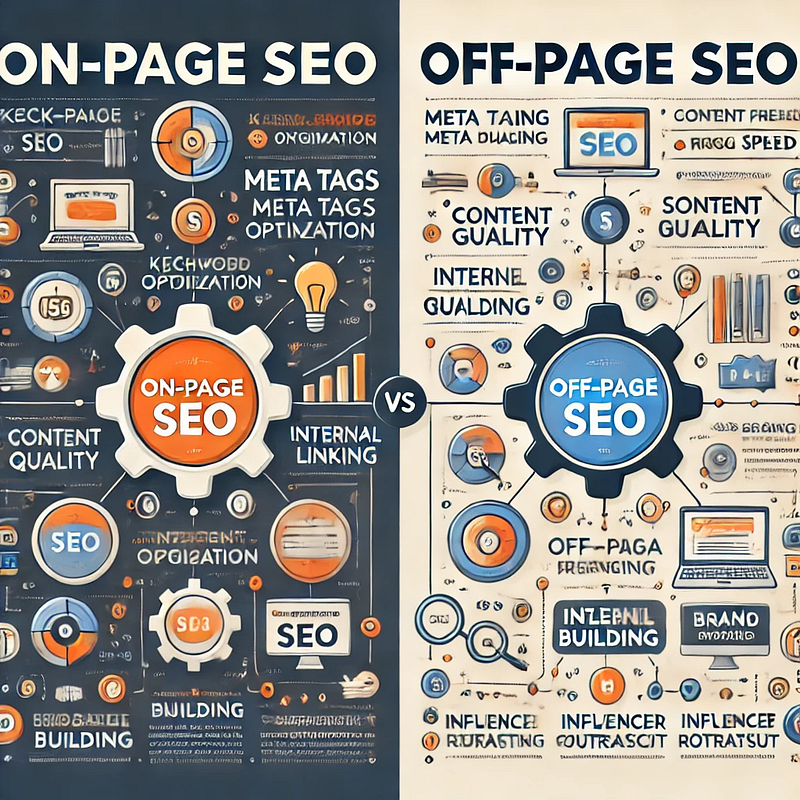
Search Engine Optimization (SEO) is divided into two major categories: On-Page SEO and Off-Page SEO. Understanding the differences and implementing best practices for both can significantly improve your website’s visibility and rankings.
What is On-Page SEO?
On-Page SEO refers to optimization techniques applied directly to a website’s content and structure to improve its ranking on search engines.
Key Factors of On-Page SEO
- Keyword Optimization — Using relevant keywords naturally within your content, headings, and meta descriptions.
- Meta Tags — Optimizing meta titles and descriptions for search engines and users.
- Content Quality — Creating valuable, original, and engaging content that answers user queries.
- URL Structure — Keeping URLs short, descriptive, and keyword-rich.
- Internal Linking — Connecting pages within your website to improve navigation and link equity.
- Image Optimization — Using alt tags, compressed images, and proper file formats for faster loading.
- Mobile-Friendliness — Ensuring a responsive design for better user experience on all devices.
- Page Speed — Improving loading speed by optimizing code, images, and server performance.
Best Practices for On-Page SEO
- Perform keyword research and use target keywords naturally.
- Write compelling and informative content for users, not just search engines.
- Optimize headings (H1, H2, H3) with relevant keywords.
- Ensure website design is responsive and user-friendly.
- Regularly update content to maintain relevance and accuracy.
What is Off-Page SEO?
Off-Page SEO focuses on activities outside your website that impact rankings and authority. It helps build credibility and trust with search engines.
Key Factors of Off-Page SEO
- Backlink Building — Acquiring high-quality backlinks from authoritative websites.
- Social Media Engagement — Sharing content on platforms like Facebook, LinkedIn, and Twitter to drive traffic.
- Guest Blogging — Writing articles for reputable sites to gain exposure and backlinks.
- Influencer Outreach — Collaborating with influencers to promote your content.
- Brand Mentions — Getting recognized by industry leaders and news outlets.
- Forum Participation — Engaging in discussions and providing valuable insights on platforms like Quora and Reddit.
Best Practices for Off-Page SEO
- Focus on high-quality backlinks from trusted sources rather than quantity.
- Engage with audiences on social media and online communities.
- Create shareable content like infographics and case studies.
- Leverage guest posting to establish authority in your niche.
- Encourage customer reviews and testimonials on reputable sites.
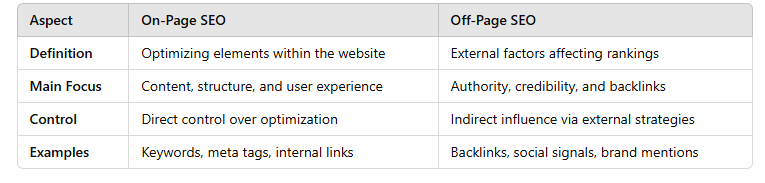
On-Page vs. Off-Page SEO: Key Differences
Final Thoughts
Both On-Page and Off-Page SEO play a crucial role in improving website rankings. A successful SEO strategy requires balancing both approaches — optimizing website content while building authority through external sources. By following best practices, you can drive more organic traffic, enhance credibility, and achieve long-term success in search engine rankings.
WEBSITE: https://www.ficusoft.in/digital-marketing-training-in-chennai/


Comments
Post a Comment