How to Build High-Quality Backlinks for SEO Success
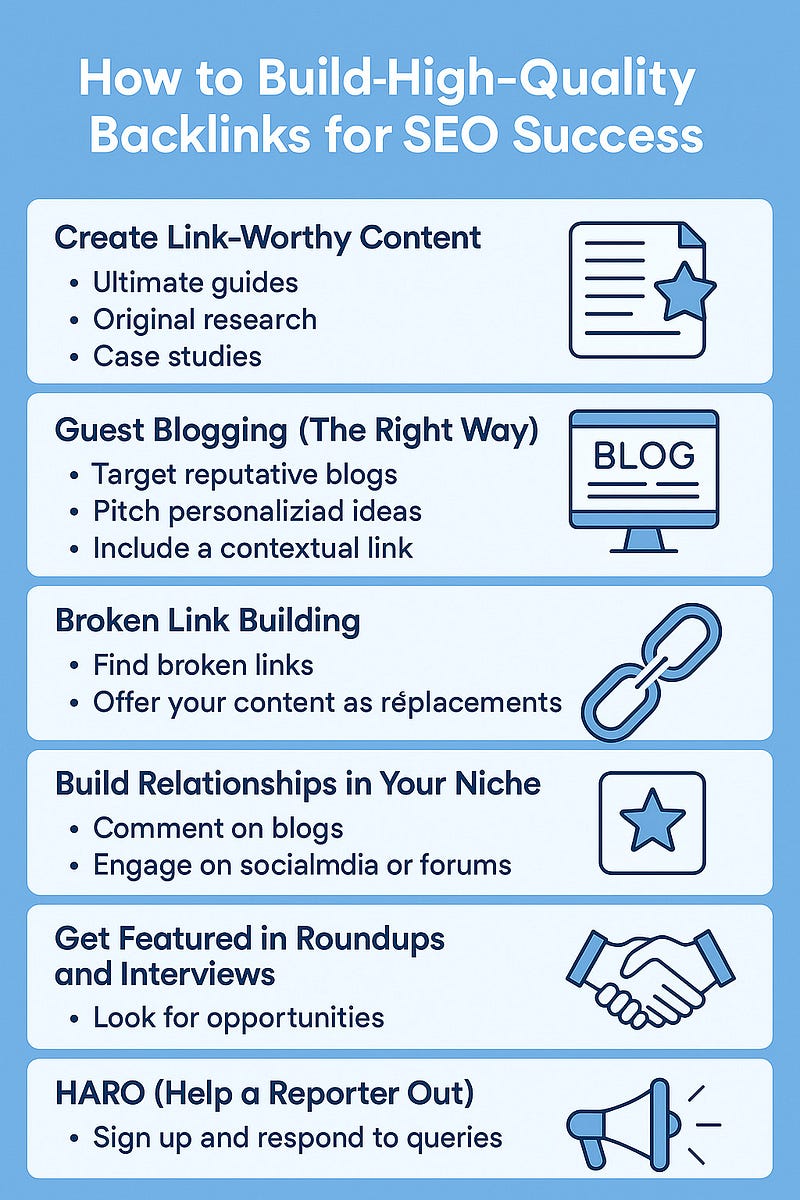
Backlinks are still one of the strongest ranking factors in SEO. But not all links are created equal. High-quality backlinks can skyrocket your rankings, drive targeted traffic, and establish your brand’s authority — while low-quality ones can do more harm than good.
So how do you earn valuable, high-authority backlinks the right way? Here’s your complete guide.
What Makes a Backlink “High-Quality”?
Before diving into tactics, it’s important to understand what separates a great backlink from a bad one:
- ✅ Relevance — Is the link coming from a site in your niche?
- ✅ Authority — Is the linking domain trusted and well-established?
- ✅ Anchor Text — Does the link include a natural, relevant anchor?
- ✅ Placement — Is the link editorially placed in the main content?
- ✅ Traffic — Does the linking site receive real organic traffic?
1. Create Link-Worthy Content
You can’t earn backlinks without content people want to link to. Focus on:
- Ultimate guides — In-depth, evergreen resources on specific topics.
- Original research — Stats and data attract journalists and bloggers.
- Case studies — Show real results, which builds trust and authority.
- Infographics — Visual content that’s easy to share and embed.
2. Guest Blogging (The Right Way)
Guest blogging still works when done right — not for spammy link drops, but for value.
Tips:
- Target reputable blogs in your industry.
- Pitch personalized ideas, not mass templates.
- Include a contextual link in the body if allowed.
3. Use the Skyscraper Technique
Coined by Brian Dean, this involves:
- Finding popular content with lots of backlinks.
- Creating something better (more comprehensive, up-to-date, or visual).
- Reaching out to those who linked to the original and suggesting your content.
4. Broken Link Building
Find broken links on relevant websites, and offer your content as a replacement.
Steps:
- Use tools like Ahrefs or Check My Links.
- Find 404s on resource pages or blogs in your niche.
- Reach out to the webmaster with a helpful, non-pushy email.
5. Build Relationships in Your Niche
Backlinks are often the result of relationships, not just outreach.
- Comment on industry blogs.
- Engage with thought leaders on X (Twitter), LinkedIn, or forums.
- Share and link to others’ content before pitching yours.
6. Get Featured in Roundups and Interviews
Look for opportunities like:
- Weekly expert roundups.
- Podcasts or written interviews.
- “Best of” blog posts.
Being helpful and available makes it more likely you’ll be included and linked to.
7. HARO (Help a Reporter Out)
Sign up at HelpAReporter.com and respond to journalist queries.
Tips:
- Be fast — reporters work on tight deadlines.
- Be concise and provide value.
- Include your credentials or why you’re qualified.
8. Repurpose & Promote Your Content
The more visibility your content gets, the more backlink opportunities it creates.
- Turn blog posts into videos, slides, or LinkedIn carousels.
- Share across platforms and communities (Reddit, Medium, etc.).
- Mention influencers in your posts, then tag them when sharing.
Final Thoughts
High-quality backlinks aren’t about gaming the system — they’re about earning trust and adding value. Focus on relevance, authority, and helpful content. Build relationships, not just links.
WEBSITE: https://www.ficusoft.in/digital-marketing-training-in-chennai/


Comments
Post a Comment